Trend Comic: The Thick, Catchy Font for Bold Designs
Understanding the Visual Punch of Trend Comic
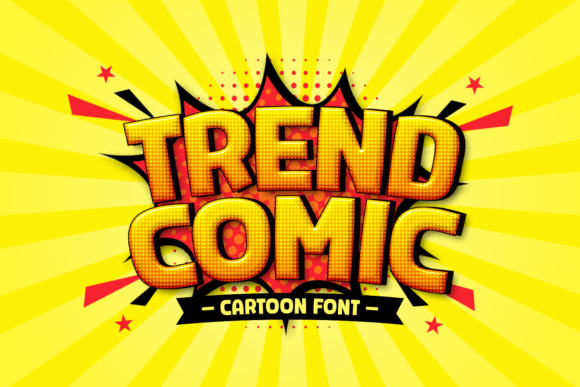
If you've spent any time scrolling through modern design trends, you know that bold, expressive typography is having a major moment. We are moving away from the ultra-minimalist, razor-thin sans serifs of the last decade and leaning into personality. This is where Trend Comic enters the conversation. It is not just another display font; it is a statement piece designed to grab attention immediately. Characterized by its thick strokes, slightly irregular baselines, and cartoon-inspired aesthetic, Trend Comic brings a sense of hand-drawn energy to digital and print projects.
Unlike a standard serif font that whispers tradition, or a generic sans serif font that blends into the background, Trend Comic shouts. Its visual weight is heavy, making it ideal for headlines that need to anchor a composition. The "catchy" nature of the typeface comes from its rounded terminals and playful geometry. It avoids looking childish by maintaining a level of sophistication in its spacing and kerning. For creative professionals, this distinction is vital. You want a font that feels fun without looking amateurish. Trend Comic strikes that balance, offering a premium font experience that feels curated rather than chaotic.
Strategic Applications for Branding and Marketing
Choosing a typeface is rarely just about aesthetics; it is about psychology. When you use Trend Comic, you are signaling a specific brand personality—one that is approachable, energetic, and confident. This makes it a powerful tool in brand identity development. If you are an entrepreneur launching a new product, specifically in lifestyle, entertainment, or food industries, this typeface can set the tone before the customer reads a single word of copy.
Consider the world of packaging design. A thick, creative font like Trend Comic stands out on a crowded shelf. It creates immediate recognition. The same logic applies to logo design. While you might not use a display font for your body copy, using it for your wordmark can make a brand unforgettable. However, context is king. This font shines brightest in environments where energy is required. It is perfect for:
- T-shirts and Merchandise: The thick strokes ensure the design is visible from a distance, making it a staple for apparel designers.
- Posters and Banners: Whether for a local event or a digital ad campaign, the font commands the viewer's gaze.
- Social Media Graphics: In a fast-scrolling feed, you have milliseconds to capture interest. The high contrast and bold style of Trend Comic stop the thumb.
- Book Covers: Particularly for children’s books, young adult fiction, or humorous non-fiction, this typeface sets the mood instantly.
Mastering Visual Hierarchy and Readability
One of the most common mistakes I see in web design and editorial design is the misuse of display type. A font like Trend Comic is built for scale. It performs best when used for short bursts of text—headlines, sub-headers, and call-to-action buttons. It is not designed for long-form reading. Trying to write a 500-word blog post in a thick cartoon style would fatigue the reader's eye.
Instead, use it to build visual hierarchy. Pair it with a clean, highly legible body font. For example, combining Trend Comic with a neutral geometric sans serif creates a pleasant contrast. The headline provides the "vibe," while the body copy provides the information. This contrast is a fundamental principle of modern typography. It guides the reader's eye from the most important element to the supporting details.
When evaluating readability, look at the spacing between letters. While Trend Comic is thick, its design allows for decent legibility at medium sizes. However, for web design, ensure you test it across different devices. A heavy font can sometimes render differently on mobile screens compared to desktops. Always check your contrast ratios; bold fonts usually require less line-height than their lighter counterparts, but you still need breathing room to avoid a claustrophobic layout.
Practical Implementation and Font Pairing
Integrating a new typeface into your workflow requires a bit of experimentation. If you are working on a branding project, don't just look at the font in isolation. Test it in mockups. How does it look on a business card? How does it look on a billboard? Trend Comic has a distinct personality, so you need to ensure it aligns with the client's voice. It is a fantastic commercial font, but it isn't a universal solution for every industry—likely not the best choice for a law firm, but perfect for a gaming channel or a bakery.
When it comes to font pairing, avoid other decorative styles. Do not pair Trend Comic with a script font or a handwritten font. The result would be visual noise. Instead, lean on structure. A classic serif or a clean sans serif acts as the perfect anchor. This allows Trend Comic to be the star of the show without overwhelming the design.
Finally, always review the included styles. Many design assets come with variations—bold, outline, or textured versions. These variations can add depth to your work. For instance, using an outline version for secondary information can create a cohesive look without the heaviness of the solid style. By understanding the full scope of the font family, you can create designs that are professional, consistent, and visually arresting.