Ristogea: Swirl Script for Bold Branding
When you're crafting a brand identity that needs to feel personal, expressive, and unmistakably confident, the typeface you choose carries enormous weight. Ristogea enters this conversation as a script font that channels the energy of tattoo lettering without feeling like a costume. It brings together flowing curves, dramatic swashes, and a sense of handcrafted authenticity that works across a surprising range of projects—from logo design to packaging design, from social media graphics to physical merchandise.
What Makes Ristogea Visually Distinct
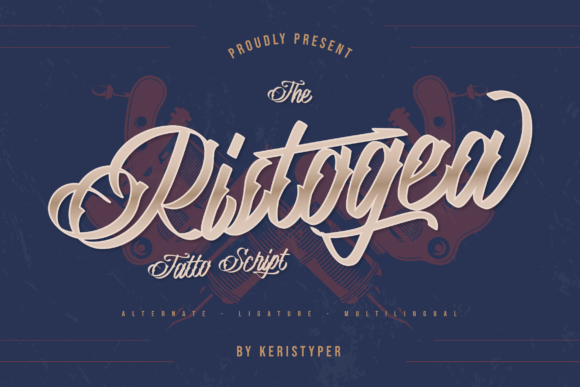
At its core, Ristogea is a modern typography interpretation of classic tattoo script. The letterforms feature generous curves and decorative swirls that give each word a sense of movement. Unlike some script fonts that lean heavily into calligraphic tradition, Ristogea feels contemporary—its strokes are confident, its connections between letters are fluid, and its overall rhythm suggests someone picked up a pen and wrote with intention.
The personality here is bold but not aggressive. There's an elegance woven into those curvy strokes that prevents the font from reading as rough or amateurish. Think of the difference between a scratchy roadside tattoo parlor and a respected studio with a curated portfolio—Ristogea belongs to the latter. It communicates craftsmanship, care, and a willingness to stand out.
What designers often notice first is how the swirl details add visual interest without overwhelming the letterforms. Each character carries enough ornamentation to feel special, but the overall word shapes remain clear. This balance matters enormously when you're working on projects where legibility can't be sacrificed for style.
Where Ristogea Fits Best
The natural starting point for a font like this is branding work that targets audiences who appreciate individuality. Tattoo studios, obviously, represent a perfect fit—but limiting Ristogea to that niche would be a mistake. Barbershops, craft breweries, streetwear brands, music labels, and artisan food companies all operate in spaces where a creative font with personality can differentiate them from competitors relying on safe, generic sans serif choices.
Consider how Ristogea performs in different contexts:
- Logo design: This is where the font truly shines. A wordmark set in Ristogea immediately establishes a brand's visual voice. The swirl details create a distinctive silhouette that becomes recognizable even at small sizes—critical for favicon, app icon, or embroidery applications.
- Invitations and event materials: Wedding invitations, party flyers, festival posters, and event programs benefit from Ristogea's celebratory energy. The script font style naturally conveys occasion and importance.
- T-shirt printing and merchandise: Apparel design thrives on bold typographic statements. Ristogea's tattoo-inspired aesthetic translates beautifully to screen printing, DTG printing, and embroidery, giving garments a premium, intentional look.
- Editorial design and covers: Magazine covers, book covers, and album artwork can use Ristogea for headlines that demand attention. Paired thoughtfully with a clean serif font or sans serif font for body text, it creates compelling visual hierarchy.
- Digital and web design: Used sparingly for hero sections, call-to-action buttons, or section headers, Ristogea brings warmth and character to websites that might otherwise feel sterile. Just be mindful of sizing—display fonts like this perform best at larger point sizes.
- Social media graphics: Instagram posts, YouTube thumbnails, and Pinterest pins all reward bold typographic choices. Ristogea helps content creators and marketers produce graphics that stop the scroll.
How Ristogea Influences Brand Perception
Typography shapes perception in ways most audiences never consciously register. When someone encounters a brand set in Ristogea, they absorb signals about personality before reading a single word. The font communicates confidence, creativity, and a rejection of bland conformity. For small business owners and entrepreneurs building brands in competitive markets, this kind of instant personality recognition is invaluable.
The curvy, flowing nature of the letterforms also introduces a human element that purely geometric or mechanical typefaces lack. There's warmth in those strokes—something handmade, something personal. Brands that want to feel approachable rather than corporate can leverage this quality effectively.
That said, context determines whether this personality serves or undermines your goals. A law firm probably shouldn't set its name in Ristogea. A vintage motorcycle shop absolutely should. The font makes a statement, and that statement needs to align with your brand identity and your audience's expectations.
Practical Guidance for Working with Ristogea
Choosing a premium font is only the beginning. How you implement it determines whether it elevates your project or creates problems. Here are some observations from a practical standpoint:
Font pairing matters enormously. Ristogea carries enough visual weight and detail that it demands a quieter partner. A simple, geometric sans serif font like Montserrat, Poppins, or even a classic like Futura provides clean contrast without competing. If you prefer a serif font pairing, something sturdy and understated—Merriweather, Lora, or a transitional design—grounds the flourishes of Ristogea. Avoid pairing it with other decorative or handwritten fonts; the result will feel cluttered and exhausting.
Test readability at your actual usage size. Set Ristogea at the size you intend to use it, then step back from your screen or print a sample. Script fonts with elaborate connections can lose clarity below 24pt in digital contexts and below 18pt in print. For body text or long-form reading, this font is the wrong tool—use it for headlines, logos, and display purposes where its personality can breathe.
Review the included character set and styles. Before committing to any commercial font, check what's actually in the package. Does Ristogea include alternates, ligatures, or swashes that let you customize specific letter combinations? These details give you flexibility and help avoid the telltale repetition that makes script fonts look templated.
Respect the licensing terms. If you're using Ristogea for client work, merchandise, or commercial applications, verify that your license covers those uses. Most design assets from reputable foundries include clear licensing information—read it. Understanding whether the license covers web embedding, print-on-demand, or unlimited commercial use protects both you and your clients.
Consider your color and background carefully. Script fonts with fine details and swirls need adequate contrast to read well. Avoid placing Ristogea over busy photographic backgrounds without a solid overlay or container. On dark backgrounds, ensure sufficient stroke weight to prevent the thin connecting strokes from disappearing.
Making Ristogea Work for Your Creative Projects
The best design assets are the ones that solve real problems while expressing genuine personality. Ristogea offers designers, crafters, bloggers, and content creators a typeface that bridges the gap between raw expression and polished execution. Its tattoo-inspired roots give it an edge that generic script fonts lack, while its clean construction keeps it usable across professional applications.
Whether you're building a brand identity from scratch, refreshing an existing visual system, or simply looking for a creative font that brings energy to your next project, Ristogea deserves a place in your typographic toolkit. Use it where it makes sense, pair it wisely, and let those swirls do what they do best—capture attention and hold it.