Horagen: The Sans Serif Font for Elegant Design
When you're working on a project that needs to feel sophisticated, clean, and visually refined, the typeface you choose carries more weight than many realize. Horagen is a sans serif font designed specifically for these moments—when elegance isn't just a nice-to-have but a core requirement. It brings together simplicity and grace in a way that feels intentional without being overwrought, making it a strong candidate for designers, entrepreneurs, and creatives who need their typography to communicate luxury and clarity simultaneously.
A Typeface Built for Visual Elegance
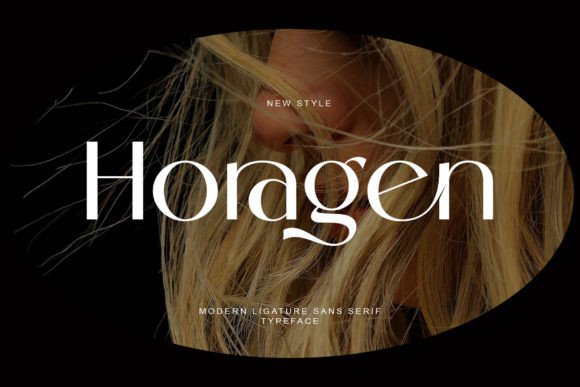
Horagen's design philosophy centers on restraint. The letterforms are clean, with well-balanced proportions and smooth curves that avoid unnecessary ornamentation. Each character feels carefully considered—there's a lightness to the strokes that keeps things airy, while the overall structure maintains enough weight to hold its own in headlines and display settings. It's the kind of font that doesn't shout for attention but earns it through quiet confidence.
What makes Horagen stand out among other sans serif options is its personality. It doesn't lean into the cold, mechanical feel that some modern sans serifs carry. Instead, there's a warmth woven into the geometry. The terminals soften slightly, the spacing feels generous, and the overall rhythm of the text creates a sense of ease. This balance between precision and approachability is what makes it work so well across a range of elegant-themed projects.
The font also ships with a range of glyphs and swashes that are PUA encoded, which means you can access every decorative character directly from your design software without special encoding knowledge. For anyone building logos, monograms, or display text with extra flair, this is a practical advantage. You get the flexibility of a more ornate typeface while keeping the core simplicity of a sans serif font.
Where Horagen Truly Shines
Think about the projects where first impressions matter most. Fashion event invitations, luxury brand logos, high-end magazine layouts, boutique packaging—these are the spaces where Horagen feels most at home. The font's clean elegance pairs naturally with industries and audiences that expect a certain level of visual polish. A beauty brand, a wedding planner, a premium skincare line, or an upscale restaurant could all use Horagen as part of their brand identity and feel confident that the typeface reinforces the right message.
Beyond luxury branding, Horagen works well in editorial design. Magazine headers, article pull quotes, and chapter titles benefit from its readability and visual hierarchy. Because it's a sans serif font, it maintains legibility at various sizes, which makes it versatile enough for both large display text and smaller supporting copy. In publishing—whether digital or print—having a typeface that scales gracefully is essential, and Horagen delivers on that front.
Digital applications deserve attention too. Social media graphics, website headers, email campaign banners, and online advertisements all need fonts that render cleanly on screens. Horagen's design holds up well in digital environments, where pixel rendering can sometimes compromise more intricate typefaces. For bloggers, content creators, and marketers who regularly produce visual assets, this kind of reliability matters. You don't want to second-guess whether your font will look sharp on a mobile screen or a desktop monitor.
Packaging design is another area where Horagen can elevate a project. Think about the shelf appeal of a well-designed product label or box. Typography plays a huge role in how consumers perceive quality, and a font like Horagen—polished but not pretentious—can help a product communicate premium value without crossing into territory that feels inaccessible. Small business owners launching their own product lines often underestimate how much the right typeface can influence buyer perception, and Horagen offers an accessible way to achieve a high-end look.
Practical Guidance for Working with Horagen
Choosing a font is rarely just about aesthetics. You need to consider how it fits within your broader design system, how it pairs with other typefaces, and whether it meets the technical requirements of your project. With Horagen, there are a few things worth keeping in mind as you evaluate whether it's the right fit.
First, consider font pairing. Horagen works beautifully alongside a classic serif font for contrast—think of a serif used for body text with Horagen handling headlines and subheadings. It also pairs well with script fonts or handwritten fonts when you want to mix elegance with a more personal, organic touch. The key is to let Horagen do the heavy lifting in terms of structure while using complementary typefaces to add texture and variety. Avoid pairing it with other geometric sans serifs that compete for attention; instead, look for typefaces that offer visual contrast.
Next, review the included styles. Depending on the version, Horagen may come with multiple weights or stylistic alternates. Understanding what's available before you start designing helps you plan your visual hierarchy more effectively. Use lighter weights for subtler text and bolder weights for emphasis. The swashes and decorative glyphs can add personality to logos or monograms, but use them sparingly—overusing ornamental characters can quickly make a design feel cluttered rather than elegant.
Readability should always be a priority. While Horagen is well-designed for display use, test it at the sizes you plan to use. A font that looks stunning at 48 pixels might lose some of its charm at 14 pixels, especially in long-form body copy. For body text, consider pairing Horagen with a more traditional sans serif or serif font that's optimized for extended reading, and reserve Horagen for headings, titles, and display applications where its elegance can fully come through.
Licensing is another practical consideration. Horagen is a commercial font, so make sure the license covers your intended use—whether that's a personal project, a client deliverable, or a product you plan to sell. Most premium font licenses are straightforward, but it's worth confirming before you commit, especially for packaging design, merchandise, or any application where the font becomes part of a commercial product.
Making the Most of a Premium Font Asset
Investing in a premium font like Horagen is about more than just buying a file. It's about adding a reliable, versatile design asset to your toolkit. When you find a typeface that consistently delivers the look and feel you need, it saves time across projects. You're not searching for the right font every time a new brief comes in—you already have something you trust.
For brand identity work, consistency is everything. Using Horagen across a brand's touchpoints—from logo design to social media graphics to printed collateral—creates a unified visual language that audiences begin to recognize. That kind of recognition builds trust, and trust drives engagement. Whether you're a freelance designer building a brand for a client or an entrepreneur developing your own visual identity, having a dependable sans serif font like Horagen in your rotation makes the process smoother and the results more cohesive.
Horagen isn't trying to be everything to everyone. It knows what it is—a clean, elegant sans serif built for projects that demand sophistication without complexity. And in that space, it performs exceptionally well.